
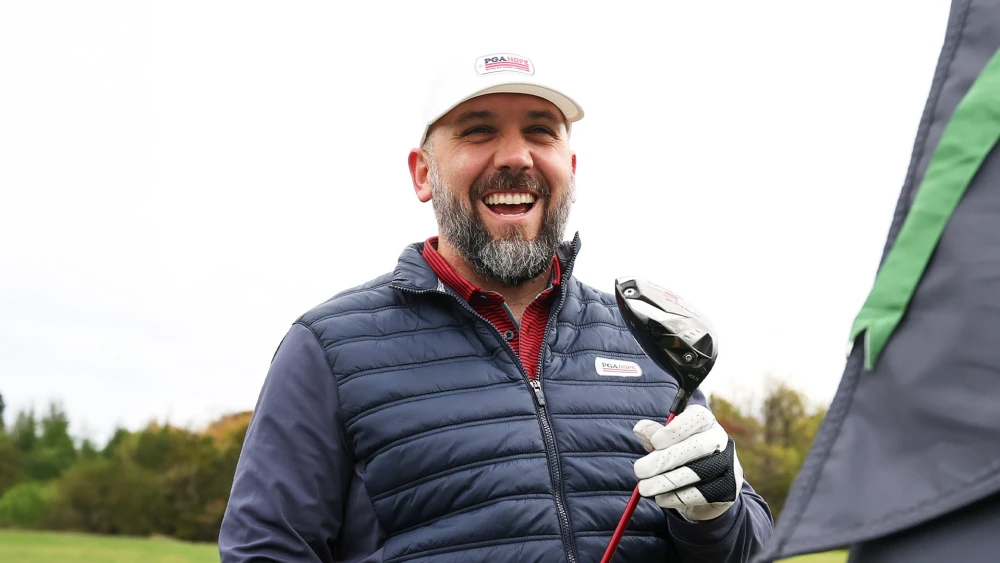
For years, Alex Badgley wrote emails to his children that he hoped they would never have to read. Some congratulated his daughter, Ava, and son, Ashton, on milestones they had yet to reach. High school graduations. Important birthdays. Becoming teenagers. Others contained fatherly advice, encouragement and reflections on his own life.
Badgley wrote them quietly, sometimes while working overseas as a civilian security contractor, sometimes while home in Michigan. They were deeply personal messages from a father trying to make sense of difficult experiences and emotions he had bottled up inside. They were written in case the unthinkable happened.
No one knew about the notes. Not even his wife, Alicia.
“I don’t know if that was a way of me providing therapy for myself,” Badgley said. “Were there suicidal thoughts at times? Yes. But I don’t believe I would’ve ever taken action. I was just at a point where I didn’t know how to define my feelings and my emotions.
“There were also times as a security contractor that scared me. Moments I didn’t know if I was going to make it through. So I’d write emails. That way, if anything ever happened to me, there was a story behind it and my children would know how much I love them.”
Eventually, he stopped writing.
Now 41, the former Marine sergeant has spent years navigating the emotional aftermath of military service, overseas deployments and the challenges of returning to civilian life. He built a family, developed a career and rediscovered his love of golf. But he still rarely spoke about his struggles.
In October, Badgley sat with 19 fellow Veterans during a mental health session outside Washington, D.C. He broke down as he shared the story of writing those emails for the first time. Two days later he returned to Michigan and told Alicia.
“I’m not afraid anymore,” Badgley said.
Long before he became a Marine, Badgley was a shy kid growing up in Battle Creek, Michigan. His parents worked factory jobs to support the family, which included his older brother. With both parents frequently working, Badgley spent considerable time with his grandmother, aunts and cousins. He spent much of his childhood with extended family, playing sports and exploring the woods with friends. Academics, however, were an issue.
“I graduated fourth from last in high school,” he said. “I barely passed.”
Golf entered his life through an older cousin. They visited a nearby practice range, grabbed whatever clubs were available and tried to hit the ball as far as possible. There was little instruction and even less concern about technique. After high school, Badgley began playing in a recreational league at Binder Park Golf Course with family members, including his Uncle Rick, who became an important figure in his life.
“I was terrible,” Badgley recalled. “But I think it was just more about hanging out and building relationships.”
That appreciation for golf’s social connections would become important years later. At the time, Badgley had more immediate concerns. College was financially out of reach. His grades weren’t good, and a summer working in a factory convinced him he needed to do something else.
One day in November 2004, his friend Derek Rice told him he’d enlisted in the Marine Corps and suggested Badgley join him. That was essentially the entire recruiting pitch. By January 2005, they were headed to boot camp together.

Badgley served in the Marine Corps from 2005 to 2011, rising to the rank of sergeant. He spent much of his military career with the 3rd Light Armored Reconnaissance Battalion in Twentynine Palms, California, and later worked with military police at Marine Corps Air Station Miramar in San Diego. He deployed twice to Iraq, first in 2006 and again in 2008, frequently working alongside explosive ordnance disposal teams. His assignments included providing security, conducting reconnaissance and supporting operations in dangerous environments.
During his first deployment, Badgley was injured when his Humvee encountered an explosive device. He continued serving, but persistent back problems followed him for years. He later learned he had sustained fractures in his upper back. The physical toll was substantial. So was the emotional burden of losing fellow Marines and witnessing the consequences of war. Yet there were also experiences that broadened his understanding of the world.
He also found purpose in teaching fellow Marines. An accomplished marksman, Badgley earned multiple expert rifle and pistol qualifications and served as a range instructor at several military installations. His service also earned him a Certificate of Commendation and Good Conduct Medal. When his enlistment neared its end, he wanted to remain in the Marines. He submitted three reenlistment applications, but downsizing prevented him from continuing. A potential career with the Los Angeles Police Department subsequently disappeared during a hiring freeze.
Once again, Badgley was looking for a new direction. He found it through a business card he had collected while working as a range instructor. A private security company hired him, beginning another extended chapter of overseas assignments. Over the next several years, he worked in Afghanistan and Iraq, providing security for visiting dignitaries, international personnel and others traveling through the region.
“That was my dream job,” he said.

Badgley met Alicia through a mutual friend at a high school football game in Battle Creek. Their relationship developed while he continued working overseas, requiring them to learn how to communicate across thousands of miles and extended periods apart.
“We couldn’t see each other,” Badgley said. “All we could do is learn how to communicate effectively to each other.”
They married Dec. 14, 2012, and welcomed Ava (13) in 2013. Their son, Ashton, now 12, followed. As the family grew, Badgley increasingly struggled with the time spent away from home. He eventually left overseas contracting work and settled in Portage, Michigan.
There, golf gradually returned to his routine. He met a playing partner, Josh, and the two began competing in a weekly league at Milham Park Golf Course. The game offered competition, friendship and a welcome break from everyday responsibilities. Badgley developed into a respectable recreational golfer and reached a 14 handicap. But beneath his outgoing personality and good-natured banter remained experiences he hadn’t fully processed.
“I think I just became so good at hiding that side of me that everybody always thought I was happy,” he said.
That began changing in 2025.

Dean Marks, the PGA Director of Golf at Milham Park, knew Badgley was a Veteran who loved golf. Marks encouraged him to participate in PGA HOPE, the PGA of America REACH Foundation’s flagship military program which introduces and teaches golf to Veterans and Active Service members.
Badgley wasn’t convinced a Veterans program could offer him anything he needed. He had little interest in revisiting his military experiences. Eventually, the promise of free lessons helped change his mind and he attended his first PGA HOPE session in spring 2025.
“This is actually cool,” he remembered thinking. “I’m learning stuff. I’m becoming a more efficient golfer.”
But the golf instruction was only part of the attraction. Badgley discovered a welcoming environment where Veterans with different backgrounds and experiences could spend time together without expectations or judgment. The connections reminded him of the camaraderie he valued during his military service.
Something that I didn’t believe could provide hope for me, it provided hope. I believe it allowed a lot of other Veterans to feel comfortable opening up – the big thing I took away from all this is I’m not afraid anymore.
He quickly became more involved, volunteered, assisted with activities and encouraged other Veterans to participate. He also began helping with junior golf, finding satisfaction in mentoring young players.
“He’s the type that you’re always happy to see,” Marks said. “He lights up the room when he walks in. He’s the person other people gravitate to. He makes everyone around him feel at ease.”
Through PGA HOPE events, he developed a friendship with another Veteran, Dusty Hull, who shared similar military experiences. They talked about their backgrounds, their families and the challenges that accompany life after military service.
Eventually, Badgley was invited to become a PGA HOPE Ambassador representing the Michigan PGA Section, a role Hull held the previous year. He didn’t know exactly what the position involved but his response was immediate.
“Sign me up, man.”
The opportunity brought him to PGA HOPE’s National Golf and Wellness Week in Washington, D.C., alongside 19 other Veterans from across the country. There was golf at Congressional Country Club, where Badgley was even assigned Rory McIlroy’s locker for the week. But as memorable as that was, it wouldn’t come close to being the most meaningful moment of the week.

The last year has been difficult for Badgley, who was grieving several personal losses from suicide and struggling with emotions he had long kept private. He arrived in Washington carrying those feelings. He was talking with PGA HOPE Program Leader Amber Bogle, who encouraged Badgley to share his story. He promised he would. When he finally spoke during the group session, other Veterans began sharing their experiences, too.
“I believe it allowed a lot of other Veterans to feel comfortable opening up,” he said.
The friendships from Washington remained equally important. He regularly talks with fellow Ambassadors, including Hull, his squad leader in D.C., sharing difficult moments as well as celebrations and everyday conversations. Those relationships have become a source of support that extends far beyond the golf course.
“I’ve never cried so much in my life since I left the Marine Corps,” Badgley said of the Washington experience and the discussions he’s had since.
“He’s a Veterans’ Veteran,” Hull said. “He has the service experience that immediately gives him credibility in the community. He’s also super personable. He can meet you wherever you are on your journey. If you’re in a deep hole, he can go there with you. If you need it to be lighter, he can do jokes with you too.”
Badgley still has difficult days. But he is now more comfortable discussing his feelings and asking for support. He also recognizes that his experiences might help other Veterans who are reluctant to seek help. That realization has given his involvement with PGA HOPE a greater purpose. He wants Veterans to know they don’t need to be accomplished golfers to participate.
Golf will provide the introduction. The relationships that follow can become something much more meaningful.
He also continues building a life with his wife and children – the family that remained central to his thoughts during those dark days so many years ago. He once wrote private messages to his children because there were things he struggled to say aloud. That no longer is the case.
“The big thing I took away from all this,” he reiterated, “is I’m not afraid anymore.”
PGA HOPE (Helping Our Patriots Everywhere) is on a mission unlike any other – to change and save Veteran’s lives through the power of golf. The program introduces and teaches golf to Veterans and Active Service Members to enhance their physical, mental, social and emotional well-being. Led by PGA of America Golf Professionals, the program is inclusive of a developmental 6-8 week curriculum. All programs are provided at no cost to all participating Veterans. To learn more or donate, visit www.pgahope.com.
